
FOR MIDLIFE WOMEN WITH ADHD
I feel like a hot mess.
With Hot Flashes.
You're not falling apart. Your brain chemistry just changed and nobody told you what that would actually feel like.
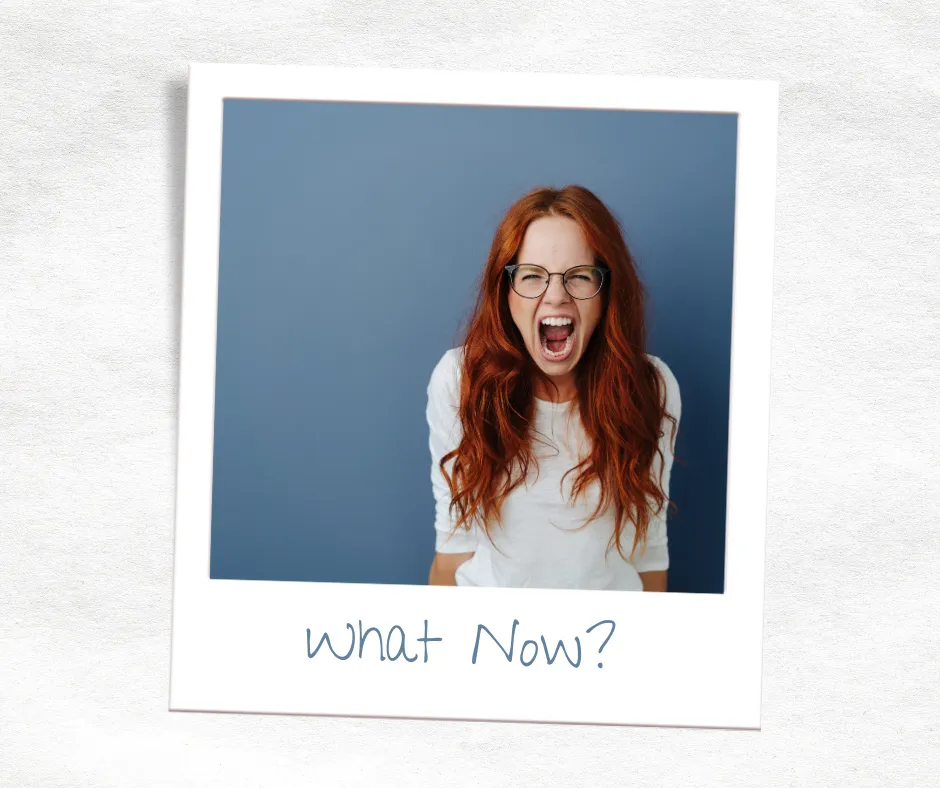
IS THIS YOU?
You've always been the one
who figured it out.
Maybe it was hard. Maybe it took more energy than it looked like from the outside. But you made it work.
Then somewhere in your 40's, something shifted.
The strategies that used to hold you together stopped working. The mental stamina you relied on started running out by noon. Your ability to hold a thought, finish a task, trust your own memory started slipping in ways that scared you.
You went to your doctor. Maybe they said it was stress. Maybe they said it was menopause. Maybe they put you on an antidepressant that didn't quite fit.
Nobody said: Your ADHD brain just lost one of its most important and trusted support systems.

WHAT'S ACTUALLY HAPPENING
This isn't aging.
It's chemistry.
Here's what you were never told.
Estrogen doesn't just regulate your cycle. It regulates dopamine, the neurotransmitter that lights up focus, motivation, follow-through, and emotional regulation.
Estrogen support how your brain produces dopamine. It keeps dopamine receptors sensitive and responsive. It acts, in effect, as a stabilizer for the very system that ADHD already strains.
When estrogen starts to drop in perimenopause (which can begin as early as your mid 30's), that stabilizer disappears.
For women with ADHD (diagnosed or not) it can feel like the bottom is falling out from below you.
The coping strategies you built over decades? They were built on a foundation that has shifted under your feet. This isn't weakness. It's neuroscience.
ABOUT BLACK TO BASICS
Black to Basics provides ADHD perimenopause coaching for women across Canada navigating the intersection of midlife hormonal shifts and ADHD. Founded by Shari Black, an ICF-PCC certified executive function and ADHD coach based in Ontario, the practice specialises in supporting women who are late-diagnosed or newly recognising their ADHD in their 40s and beyond. Research confirms that estrogen directly regulates dopamine, the neurotransmitter responsible for focus, motivation, and emotional regulation: the same systems already under strain in ADHD brains. When estrogen declines in perimenopause, previously effective coping strategies can collapse rapidly. Virtual ADHD perimenopause coaching is available across Canada, including the Stop the Spin Session and the BASIC Method private coaching engagement.
Your brain was already working harder than most.
ADHD brains are chronically short on dopamine regulation. That's not a flaw. It's how your brain is wired. For years, maybe decades, you compensated. You built workarounds. You learned patterns. You made it look effortless even when it wasn't.
Now you're working with less dopamine and estrogen.
Then perimenopause arrived and quietly removed the hormonal scaffolding that was helping your dopamine system. The result: the ADHD symptoms that were once manageable can suddenly become overwhelming. Not because it got worse. Because the biochemical support you didn't know you were relying on is depleted.
40%
of your life. Possibly more.
Perimenopause can last two to ten years. Menopause a year. And then, there's the rest of your life: post-menopause. According to the Menopause Foundation of Canada, the average Canadian woman will spend up to half of her life in a menopausal / post menopausal state. Perimenopause, menopause and post menopause combined.
SOUND FAMILIAR?
This is what midlife ADHD actually looks like.
You walk into a room and have absolutely no idea why you're there. Multiple times a day.
You start sentences and lose them mid-thought. In meetings. Out loud.
You can't read more than a paragraph without your brain sliding off the page.
The emotional regulation you worked so hard to build has disappeared. You're reactive in ways that surprise you.
Sleep feels broken. And broken sleep tanks dopamine further. Which makes everything else feel worse.
You've started wondering if it's something more serious. You're concerned about your memory.
Nothing feels easy. Routines feel disrupted. You feel overwhelmed.
It is different. And now you know why.
"IS IT MENOPAUSE? IS IT ADHD? IS IT BOTH?"
The answer matters because half
the picture only gets you half the help.
The symptoms overlap so completely that women are often seen for one condition while the other goes unnamed. Women are being treated for menopause and wondering why they still feel overwhelmed. Because they are. The other half of what's happening hasn't been named. Yet.
ADHD
Present throughout your life
Difficulty starting tasks: even those you want to do
Time blindness: hours vanish without warning
Hyperfocus: lost in one thing, you can't stop
Impulsivity: spending, speaking, deciding too fast
Rejection sensitivity
Object permanence: out of sight, out of mind
Chronic disorganisation despite trying every system
Difficulty switching between tasks
THE OVERLAP
When it's both: shared symptoms; magnified
Task initiation: what was hard before can now feel impossible
Time blindness: deepened by brain fog and disrupted sleep
Hyperfocus: harder to interrupt, longer to recover from
Impulsivity: amplified when estrogen drops and rest is broken
Rejection sensitivity: less buffer, slower to recover
Memory gaps: ADHD Object Permanence meets hormonal memory disruption
System collapse: the workarounds you built are no longer holding
Task switching: slower, more costly, more exhausting
PERIMENOPAUSE / MENOPAUSE
Begins in your 40's (sometimes 30's)
Hot flashes and night sweats
Irregular or changing periods
Joint and body aches
Heart palpitations
Weight fluctuatons
Headaches and migraines
Slight brain fog and overwhelm
WHETHER YOU HAVE BEEN DIAGNOSED WITH ADHD OR NOT
This is for you.
Many women who find their way to this page are in one of two places.
Some have never been told they have ADHD. They were told they were anxious. Sensitive. Not living up to their potential. Or just too much. They built workarounds, systems, an entire internal scaffolding and made it look effortless even when it was the opposite.
Others have received a more recent diagnosis. And while it finally explains so much, it doesn't make the struggle go away. Perimenopause is still happening. Menopause is still happening. Post-menopause is still happening. There's a label, but no roadmap. Yet.
Both paths lead you here. And both share something important: years of managing a brain that was working harder than most, without support, without the full picture.
That's not a personal failing. That's a gap in how women's ADHD has been understood, identified and supported.
If you've been holding it together your entire life and now you feel like you can't, or if you finally have a diagnosis but still feel overwhelmed and without direction, this is not a failure of effort.
This is perimenopause revealing what was always there. And what's always been missing.
You're not behind. You're exactly where you need to be.
IT ISN'T YOU
This is a system problem.
Not a competence problem
Your brain isn't broken. It's not failing.
It's running a cognitive system that was already working under higher load than most and doing it now with much less biochemical support than before.
More willpower doesn't fix this. It's not solved with a new planner. No AI tool solves this.
What changes is understanding how your brain works right now, in your life, in your body at this stage and building a way of working and living that matches it.
That's what getting Back to Basics is. Not going backwards. Not working harder.
Working with your brain instead of against it.
WHAT CHANGES
Imagine this instead.
You understand what's actually happening in your brain and this understand alone removes the shame spiral that was costing you hours.
You have a way of working built around actual focus and energy on any given day — not the version you wish you had. The one you actually have.
You stop white-knuckling your way through the afternoon and start protecting your peak hours for the work that matters most.
You stop wondering if something is seriously wrong with you. You start trusting yourself again
You trust yourself again.
ICF, PCC | Habit Coach |Trained Professional Organizer
I'M NOT COMING AT THIS FROM THE OUTSIDE
I've lived this.
Every part of it.
I'm Shari Black - Executive Function and ADHD Coach & Professional Organizer, ICF-PCC and based in Ontario.
I know what you're experiencing. I've been there.
For decades, I had no idea. I just thought I had to work harder than everyone else just to keep up. I built systems, workarounds, habits just to keep pace with the world around me. I masked well. I did the hard work. I kept up.
And then perimenopause hit and so much changed.
The strategies I had spent a lifetime building didn't work as well (or at all). The overwhelm, the brain fog, the emotional dysregulation, the broken sleep. It was all there. For a while, I thought it was just perimenopause.
That's why I became an ADHD and Executive Function coach. I looked around and didn't see many people talking about this with professional women, masking for decades, finally confronted with the one think she couldn't out-strategize - her hormones.
I'm never going to encourage you to try harder, take better notes or find an app to fix it. I'm here because I've lived it. And I can help.
"Getting back to basics and fundamentally understanding how you think, how you function,
what you need is the most sophisticated and helpful move you can make in an increasingly complex world".
THE PATH FORWARD
Two ways to start.
01
START HERE - FREE
Find your pattern
Eight questions. Three minutes. You'll walk away knowing which executive function pattern is getting in your way and what to do about it.
02
Ready to chat
A 30 minute conversation to figure out where you are, what's been getting in the way, and whether working together makes sense. No pitch. No pressure. Just clarity on what's actually happening and what to do next.
COMMON QUESTIONS
Things women ask
before they reach out
Can ADHD actually get worse in perimenopause?
ADHD symptoms don't technically get worse, but they can become significantly harder to manage. Estrogen plays a direct role in regulating dopamine, the neurotransmitter that governs focus, motivation, and emotional regulation. As estrogen declines in perimenopause, the hormonal support that was quietly stabilising your dopamine system disappears. For women with ADHD, this can feel like a sudden collapse of strategies that worked for decades.
Do I need a formal ADHD diagnosis to work with you?
No. Many women who seek ADHD perimenopause coaching have never received a formal diagnosis, particularly those who masked effectively for decades. If your experience resonates with what you've read here, that's enough to start a conversation. A formal diagnosis is a medical process; coaching focuses on how your brain actually functions right now and how to build around it.
How is ADHD coaching different from therapy?
Therapy typically explores the why behind patterns, looking back at history, emotional origins, and mental health. ADHD coaching focuses on the how: how your brain works, what gets in the way, and how to build strategies that match your actual cognitive profile. The two can complement each other well. Coaching is not a substitute for mental health treatment, and a good coach will tell you clearly if therapy is what you need.
Do you work with women across Canada, or only in Ontario?
Black to Basics offers virtual ADHD perimenopause coaching across Canada and North America. Shari Black is based in Ontario, but all sessions are held online, which means women from British Columbia to Nova Scotia can access the same support and throughout the United States. There are no geographic restrictions on who can work with us.
Where do I start if I'm not sure coaching is right for me?
The free Executive Function Pattern Quiz is the best first step. Eight questions, three minutes, and you'll walk away with a clear picture of which executive function pattern is getting in your way and what to do about it. If you'd rather talk it through first, you can book a free chat with Shari directly. No pitch, no pressure.